Eyeing a large, wooded lot in West Meade or Hillwood and wondering if a teardown or custom build makes sense? You’re not alone. This pocket of west Nashville draws buyers and small investors who want space, privacy, and luxury new construction potential. In this guide, you’ll learn where the value is, how zoning shapes your options, what price bands look like, and what to expect from permits and timelines. Let’s dive in.
West Meade and Hillwood at a glance
West Meade and the adjacent Hillwood area sit west of downtown near Percy Warner and Edwin Warner Parks. The neighborhood is known for mature trees and large, often estate-size lots. The West Meade Neighborhood Association maintains local boundary context and community resources you can reference for orientation and updates. You can review those resources on the West Meade Neighborhood Association’s about page.
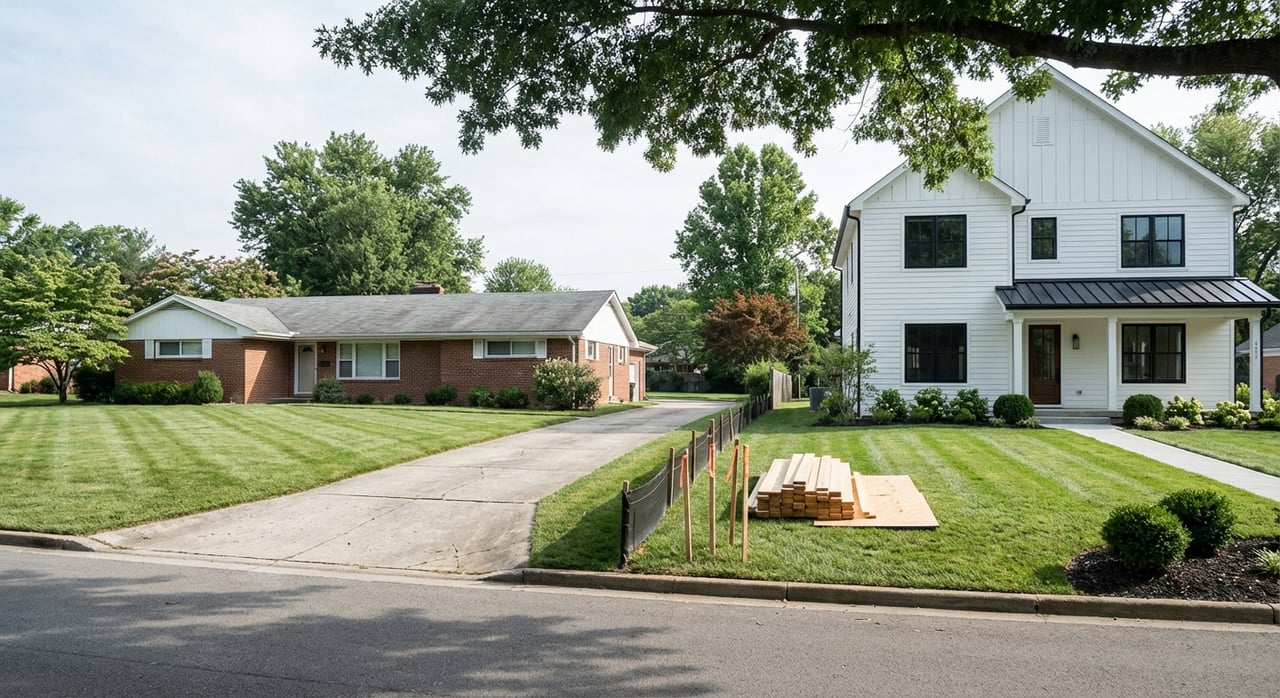
Many parcels here are in RS40 zoning, which often means close to an acre or more. You’ll see a mix of 1950s–1970s ranch homes, updated contemporaries, and recent luxury custom estates. That blend creates steady demand for both well-kept ranches and teardown lots that support new high-end builds.
Zoning basics shape what you can build
RS40 and common districts
Metro Nashville’s RS districts are single-family residential zones. RS40 requires a minimum 40,000 square foot lot, which preserves larger parcel sizes and typically supports estate-scale homes. Smaller lots in pockets of the neighborhood may be RS20, RS15, or RS10 depending on the street and plat history. Always confirm a property’s zoning and the related bulk standards in Metro’s published district definitions and tables. See Metro’s zoning classifications overview for details.
Practical takeaway: If your plan depends on subdividing an RS40 parcel, you may face a longer path and public approvals. Base RS40 lots do not typically split into multiple infill parcels without a rezone or Specific Plan.
How to verify a parcel
Before you write an offer, confirm zoning and overlays in Metro’s Parcel Viewer. From there, check the District Bulk Tables and Street Setbacks that control height, setbacks, and lot area. If an overlay applies, there may be design review steps. Start with Metro’s maps and Parcel Viewer and the Codes summary on understanding the zoning code.
Trees, landscaping, and stormwater
Tree protection and landscaping rules can affect your buildable envelope, driveway placement, and timing. Urban Forestry enforces tree preservation and replanting requirements and can require protective measures during construction. Review guidance from Metro’s Urban Forestry team and plan for potential inspections and mitigation. Learn more on Metro’s Urban Forestry page.
Permits and timeline signals
A typical teardown path includes a demo permit, site work and erosion control, tree protection review as needed, plans review for the new build, and then inspections leading to Use & Occupancy. Demo permits can carry conditions and timelines, and full plan review for a custom build can take months depending on complexity and utilities. You can explore permit guidance and processes via Metro’s Codes and Use & Occupancy resource.
Policy changes to watch
Citywide housing policy proposals in 2025 may adjust accessory dwelling and design standards in the future. They do not automatically rezone parcels but could influence options across the city if adopted. For local reactions and updates, see the West Meade Neighborhood Association’s policy engagement page.
What lots and homes are trading for
Neighborhood medians reported by major listing platforms are generally in the low seven-figure range for West Meade, with Hillwood often reading higher due to more frequent estate-scale sales. Price per square foot on high-end product commonly ranges from the mid-$300s to $600+ per square foot on recent luxury listings. Treat platform medians as directional; specific comps on your street will matter most.
- Vacant lots. Recent 0.9 to 1.1 acre lots have sold in roughly the $400,000 to $700,000 range depending on location and buildability. Historical MLS records for larger lots, such as a 1.54-acre parcel on Baskin Drive, show transactions in the mid-$200,000s up to the $600,000 range in past cycles. Lot value is highly site-specific and driven by frontage, slope, trees, and utilities.
- Mid-century ranches. Smaller ranch homes on large lots often list and sell between about $500,000 and $1.2 million depending on the lot and level of updates. Some are renovated and held, while others become teardown candidates for a larger replacement.
- Luxury new construction. Custom luxury homes in West Meade and Hillwood commonly trade from about $2 million up to $10 million or more on trophy acreage. Recent examples show finished prices in the $400 to $650+ per square foot range, with one roughly 4,680 square foot new build listed around $2.599 million at about $555 per square foot. Local builder portfolios reflect active demand and frequent neighborhood projects.
For examples of local builder activity, view the communities and project list from Landon Development. Use direct, recent comps for any valuation and plan.
How to win a prime lot
Critical early due diligence
- Verify zoning and overlays. Use Metro’s Parcel Viewer and maps to confirm base zoning, overlays, setbacks, and any floodplain or drainage features.
- Order a current survey. Ask for an ALTA survey with a simple topo sketch that maps easements and tree locations. Significant trees and root zones can shift the buildable area and driveway plan. Review guidance from Urban Forestry.
- Confirm utilities. Check public water and sewer availability and any capacity or connection constraints for a large new home. Some streets are fully served, while others need line extensions or upgrades.
- Assess site constraints. Walk the site and compare to Parcel Viewer layers for slope, drainage, and any mapped flood zones. These items affect design, cost, and permit timing.
- Entitlement reality check. If your plan relies on subdividing or different uses than the base zone allows, budget months for a rezone or Specific Plan review. Start by reviewing Metro’s zoning classifications.
Offer terms that help you compete
- Be project ready. Sellers respond to buyers who already have a survey in hand, lender pre-approval or proof of funds, and a short inspection window they can trust.
- Align conditions to your risk. If you need permits or variances to make the numbers work, write the price and timelines accordingly. If a clean, quick close is the seller’s top goal, expect to pay a premium for fewer contingencies.
- Leverage builder relationships. A known, reputable local builder can help you price the build, refine the schedule, and present a credible plan to the seller. Neighborhood groups also track builder reputations and practices, which can shape seller comfort. See the West Meade Neighborhood Association’s builder resources.
Permitting timeline and cost buckets
- Timeline. Plan for roughly 12 to 24 months from purchase to move-in on a full teardown and luxury rebuild. That can include 1 to 3 months for demo and site prep, several months for plan review depending on complexity, and 9 to 18 months for construction. Explore process details at Metro’s Codes and Use & Occupancy resource.
- Budget beyond land. Include demolition, erosion control and stormwater measures, tree protection and replanting, sewer and water connections or upgrades, and soft costs for design, engineering, surveys, and fees. On wooded or sloped lots, these items can be material.
Owner-occupants vs small investors
- Owner-occupants. If you plan to live here, focus on a lot and plan that match your daily needs and the outdoor features you value. Be ready for a longer custom timeline to get the house and setting you want.
- Small-scale investors. Prioritize lot economics and a clear, low-risk path to a profitable build or resale. Align early with a builder to keep costs and timelines under control, and consider multiple exit options.
Build-to-rent concepts are present in the corridor alongside custom resale product. For example, Crescent Communities announced construction on HARMON West Meade build-to-rent townhomes, reflecting institutional interest in the area’s fundamentals.
Local dynamics to watch
Expect steady competition for well-located lots, especially those with gentle slopes, strong frontage, and easy utility access. Local custom builders remain active in West Meade and Hillwood, and their portfolios showcase frequent neighborhood builds. You can browse a representative portfolio at Landon Development. Also track neighborhood updates and policy discussions via the West Meade Neighborhood Association’s policy engagement page.
Ready to pinpoint the right lot, run a zoning check, or map a custom build timeline? Reach out to Ravi Sachan. You’ll get hands-on guidance backed by 20+ years of local experience and a trusted vendor network to move from search to successful build.
FAQs
What makes West Meade and Hillwood attractive for teardowns?
- Large RS40 parcels, mature trees, and proximity to parks create strong demand for luxury replacement homes where lot economics support a custom build.
How do I confirm if a West Meade lot is subdividable?
- Start in Metro’s Parcel Viewer to verify base zoning and overlays, then review bulk tables and setbacks. RS40 lots usually require rezoning or a Specific Plan to subdivide.
What permit steps should I expect for a teardown and new build?
- You’ll typically secure a demo permit, implement site and tree protection, complete plans review, and pass inspections before obtaining Use & Occupancy approval.
How long does a luxury custom build take after buying a lot?
- Budget 12 to 24 months from purchase to move-in, with several months for permitting and 9 to 18 months for construction depending on complexity.
What additional costs should I plan for beyond land price?
- Include demolition, stormwater and erosion control, tree mitigation, utility connections or upgrades, and soft costs for design and engineering.